4 ways to conquer takeout and delivery challenges

SUMMARY: Boost your bottom line with four effective ways to improve takeout and delivery performance.
Off-premise trends create new opportunities
While casual‑dining operators were among the first to offer pickup, many are now expanding their off‑premise reach with delivery and navigating a new set of challenges along the way.
To put it into perspective, off‑premise dining now accounts for 54% of restaurant revenue,1 and nearly 75% of all restaurant traffic happens off‑premises. That means almost three out of four orders are taken to go.2
As operators expand their delivery offerings, meeting customer expectations becomes critical. Consumers want speed, ease of use and rewarding experiences: 94% say speed is essential, and more than nine in ten cite customer service as a top priority. In addition, three‑quarters of delivery customers value tech‑enabled ordering and payment options.3
Convenience also plays a major role in how guests choose to order. Consumers prefer third‑party delivery apps over ordering directly from restaurants, with ease of use being the top driver for 49% of U.S. consumers.4
Navigate off‑premise by focusing on these four areas
Maintaining Quality
Casual-dining consumers expect delivered food to be high quality and operators can help conquer this challenge by focusing on smart packaging choices. Packaging plays a major role in that experience. Ninety percent of guests say they would order a wider variety of menu items if the food maintained its on‑premise quality during delivery, and more than half would pay extra for premium packaging that protects food throughout transport.3
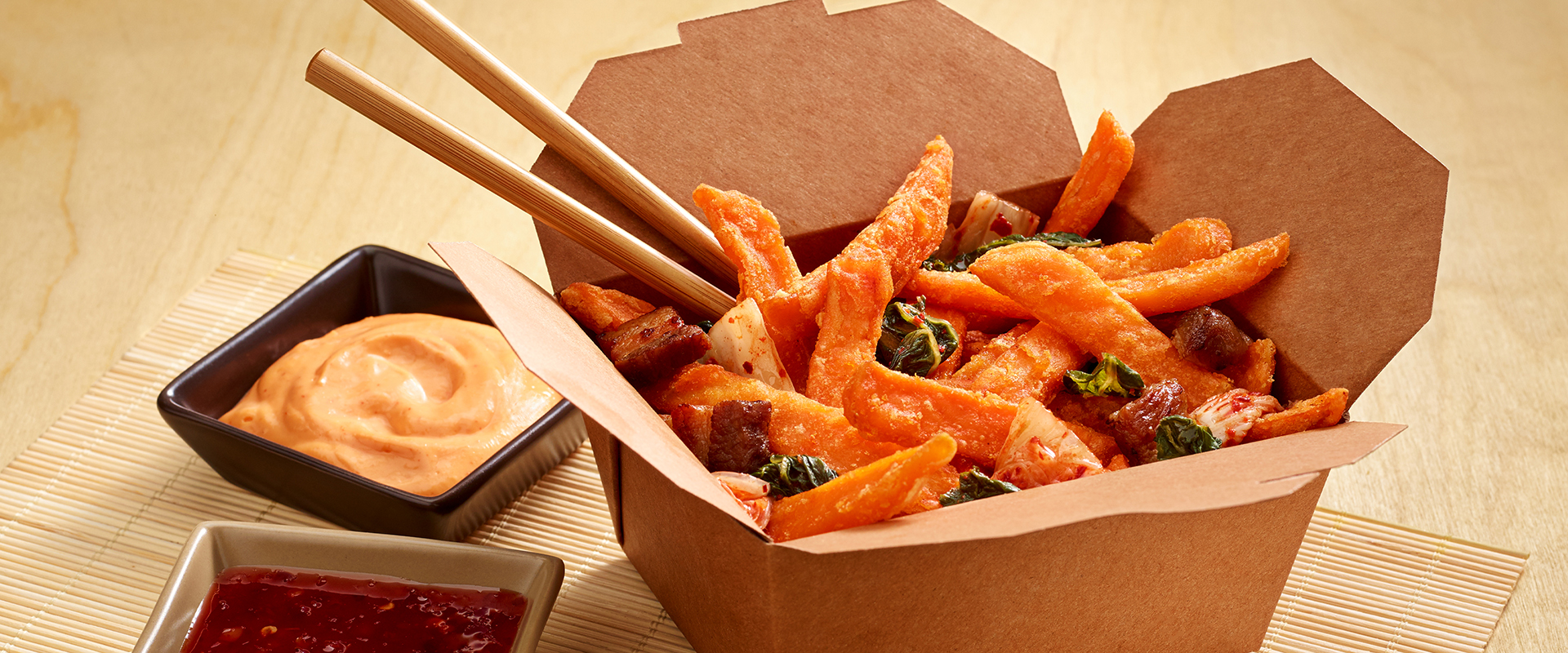
The box of choice has traditionally been a polystyrene container, but some municipalities have acted to ban the material. As a result, operators must find other packaging that keeps the hot food hot, the cold food cold — and even better, is microwaveable. In addition, boxes should have vents to ensure foods such as fried potatoes, mozzarella sticks and onion rings remain hot and crispy. Also, it helps to add paper napkins between layers of fries, and within the container, to insulate the food and to absorb moisture.

Cost Competition
Certainly, affordability poses another challenge to casual-dining operators looking to cash in on the growing off-premise dining trend. To help conquer this, value‑driven menu strategies become essential. More than 80% of consumers are influenced by deals like BOGO offers, combo meals or real‑time specials. Loyalty programs also influence 65% of drive‑thru users and over 60% of takeout and delivery users.3
Limited‑time offers carry significant weight as well, with 91% of consumers saying they are more likely to visit a chain when new items or limited-time offers (LTOs) are available.5
Meanwhile, operators consistently report that LTOs, bundled appetizers or fry deals help lift ticket averages and improve group retention,6 reinforcing these as effective ways to stay competitive within off‑premise price expectations.
Third-Party Delivery
Many operators are expanding delivery capabilities by partnering with third-party delivery companies. But that in itself can present challenges for franchised companies.
For example, 46% of Americans prefer ordering through third‑party apps, largely because of convenience, yet 49% of U.S. consumers choose apps primarily because they are easier to use. At the same time, guests vary widely in what they are willing to pay in delivery fees, which can complicate pricing and profitability for operators tied to third‑party platforms.4
To help overcome these challenges, operators can optimize how they work with third‑party partners. Consolidating platforms through a single POS integration can reduce order errors and streamline workflows. In addition, creating delivery‑friendly menu bundles, clearly outlining prep times and using packaging that protects food quality can help offset the variables that come with third‑party handoffs.
Another challenge is that if a franchisee signs up with multiple delivery partners, kitchen staff must keep track of several tablets at once showing individual incoming orders. Using unified tablet or POS solutions can simplify this process, helping teams stay efficient during peak times.
Lack of Data
The loss of brand presence or identity is another risk operators might run when offering delivery. Relying on third‑party apps can also mean potential loss of valuable first‑party customer data that restaurants depend on to build loyalty, personalize offers and drive repeat business. To help conquer this challenge, operators can take steps to drive more direct ordering and strengthen their own customer relationships.
Operators can retain important data by encouraging customers to order directly from the restaurant’s website.
Incentives can range from a 10% discount for signing up for loyalty programs, to $5 off the first online order if the customer shares their email address, to seasonal discounts on limited-time-offer menu items if the diner orders online. And loyalty pays off —78% of customers say they’re more likely to return to a restaurant where they can earn rewards, even if it’s less convenient.4
In addition, more than half of U.S. consumers are comfortable with restaurants and third-party apps using AI to personalize recommendations based on their past orders.4
And Millennials in the U.S. are the most open to AI-powered restaurant recommendations (60%), followed by Gen X (51%), Gen Z (44%) and Baby Boomers (40%).4
For operators who can overcome these barriers, delivery can provide incremental revenue while attracting new customers. The key is to follow best practices when it comes to packaging, products, partners and overall execution. By focusing on these four areas, operators can consistently deliver quality and value, overcoming common takeout and delivery challenges.
SOURCES
1Toast; Restaurant Trends Report 2025.
2National Restaurant Association; 2025 Off‑Premises Restaurant Trends Report.
3National Restaurant Association; From Trend to Transformation: Off‑Premises Dining Now Essential for Restaurant Consumers and Operators.
4DoorDash; DoorDash for Merchants, 50+ Food and Alcohol Delivery Statistics and Trends for 2025.
5Circana; The Strategic Influence and Timeless Impact of Limited‑Time Offers in Shaping Consumer Behavior.
6Mintel; Multicultural America: Dining Out, U.S. 2024.