Lift your margins by building on takeout and delivery

SUMMARY: Leaning into off‑premise isn’t optional. It’s the fastest way to capture demand and turn convenience into consistent revenue.
Tap into what’s fueling off-premise momentum
Thanks to online ordering, delivery apps and other digital advances, takeout and delivery continue to be a growing opportunity for restaurants to acquire new and repeat business. In fact, more than 60% of younger adults say they use takeout, drive-thru and delivery more often now than they did a year ago.1
Third‑party delivery apps are a big reason off‑premise dining keeps growing. It all comes down to convenience, and with 49% of U.S. consumers prioritizing ease when ordering,2 a smooth, frictionless experience matters just as much as the meal.
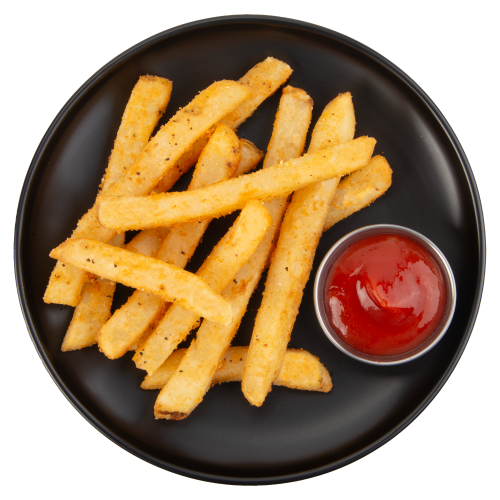
In terms of what they’re ordering the most, one area of the menu that stands to gain traction from delivery and takeout orders is the appetizer menu — French fries and loaded fries, in particular.
Here’s three ways to make takeout and delivery options even more convenient and attract even more customers.
Delivery apps and online ordering: how to use both for maximum gain
While online and app ordering may have begun as a trend in quick-service restaurants, it is now welcomed and expected at all types of dining establishments. Forty‑six percent of Americans prefer ordering food delivery through third‑party apps or websites.2 This particularly applies to the younger generations, as 41% of guests ages 25 – 34 prefer to place an order through a third-party app and 39% of guests ages 18 – 24 said the same.3
Beyond fulfilling a consumer need, it’s also good for operators’ bottom line. As off‑premise dining continues to reshape the industry, nearly 75% of all restaurant traffic now happens outside the four walls, meaning almost three out of four orders are taken to go.1
On the other hand, restaurants could launch a personalized app or website specifically for online orders. About 33% of customers prefer placing orders directly through a restaurant’s own app.3 Therefore, it’s essential a dedicated online ordering system be in place to entice customers.
It’s also important to highlight limited-time offers, like loaded fries on game day or wings-and-fries combo meals on weeknights when families might be looking for a quick and convenient meal to pick up on the way home from work.
Don’t underestimate the power of a pick-up window
If customers are stopping by to pick up their online orders, it’s important for restaurants to make that experience as seamless as possible. That applies to full‑service restaurants too. In fact, 42% of guests say they use the drive‑thru each week.¹
While many full-service restaurants currently offer off-premise options, operators see strong potential in expanding them: 43% expect curbside pickup to grow, 31% anticipate adding more dedicated takeout counters and 12% foresee incorporating additional drive‑thru lanes.5
For many, these aren’t just operational tweaks, they’re strategic investments in future growth. If there’s no room or appropriate spot for such a feature, consider whether it’s possible for restaurant staff to run takeout orders out to diners’ cars for curbside delivery, as an added convenience.
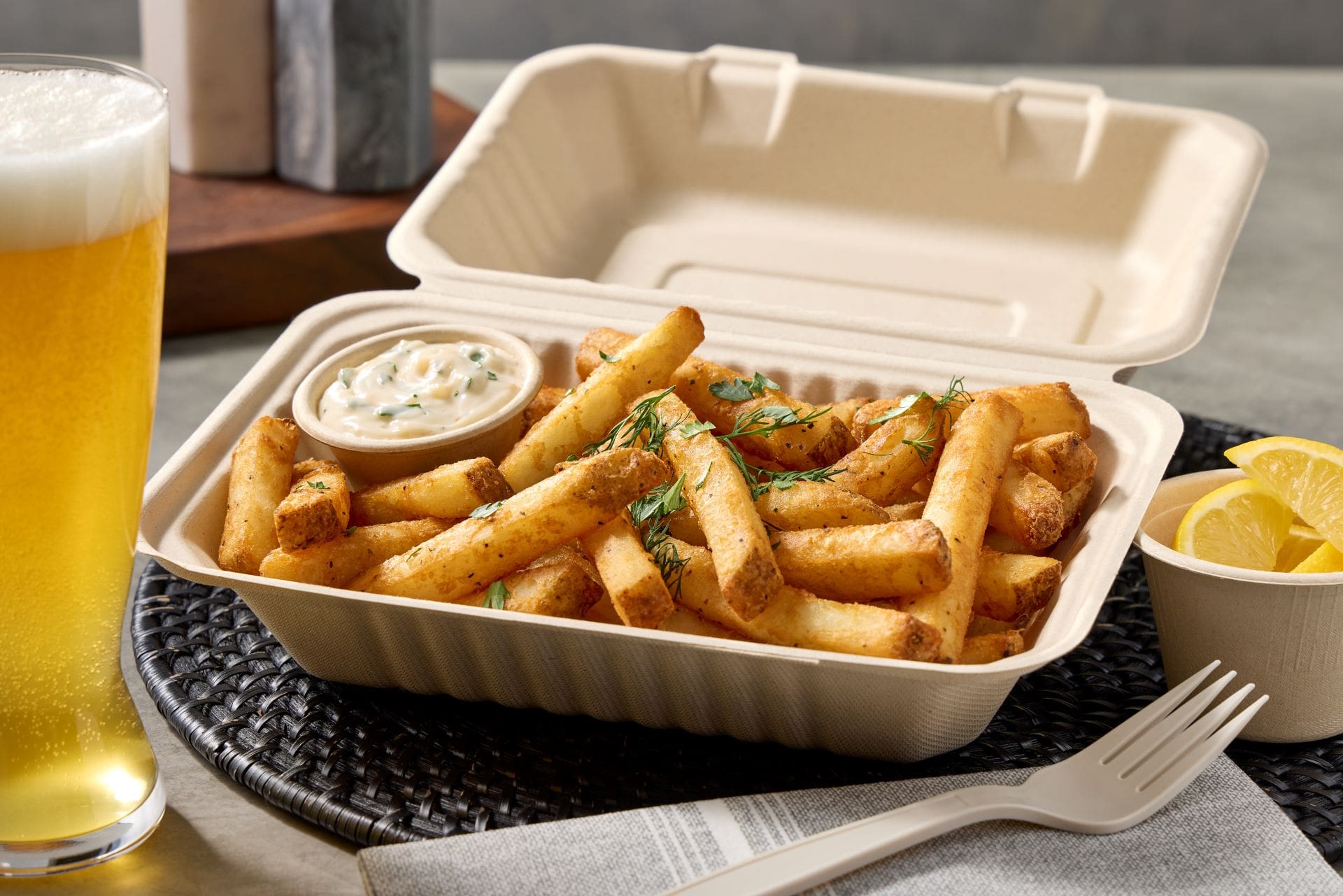
Packaging plays a pivotal role in the off‑premise experience. When 90% of diners say they’d order a wider variety of items if the food could maintain its on‑premises quality during delivery — and more than half report they’d even pay extra for premium packaging that protects that quality5 — it becomes clear that packaging isn’t just functional, it’s a revenue driver.
By choosing materials and designs that keep items crisp, hot and intact throughout transport, operators can unlock stronger guest satisfaction, greater menu flexibility and more repeat orders.
For instance, French fries have a bigger share off-premise than on-premise, so it’s a must that they arrive in good condition, not cold or soggy. Using coated fries, such as McCain’s SureCrisp®, ensures longer hold times and up to 30 minutes of crispness — ideal for maintaining takeout quality. This can help restaurants ensure the best quality for their takeout and delivery orders.
Whether the consumer is picking the food up from a pick-up window or getting it delivered, it’s crucial to package food properly so it arrives tasting great. For example, appetizers like French fries, loaded fries and other fried apps should be packaged in boxes or containers that allow the food to breathe a bit, so that the condensation doesn’t make the food soggy on the way to the diner’s destination.
Overall, diners say they expect to wait between 20 and 30 minutes for carryout and delivery food, so restaurants should plan accordingly.
Send online and app orders straight to the register
Behind the scenes at restaurants, online and app ordering can be made more convenient (and accurate) by having orders sent straight to the point-of-sale (POS) system rather than having them routed through a different system or tablet. This reduces the chance for human error and it also saves time by automating payments.
The popularity of takeout and delivery shows no signs of slowing down, so it’s in every restaurant’s best interest to capitalize on the sales growth. Look for ways to make off-site dining as convenient as possible, whether that means streamlining how takeout and delivery orders are received, launching an app specific to the restaurant or offering curbside delivery.
Ultimately, off‑premise isn’t just a trend. It’s a long‑term growth engine. Operators who streamline ordering and make small upgrades to the takeout experience will be best positioned to capture more visits and keep guests coming back.
SOURCES
1National Restaurant Association; Restaurant Trends 2025.
2DoorDash; DoorDash For Merchants, 50+ Food and Alcohol Delivery Statistics and Trends for 2025.
3Toast; Food Delivery Trends: 47% Of Respondents Are Willing To Pay $3-$6 In Delivery Fees.
4Toast; Restaurant Trends Report 2025.
5National Restaurant Association; From Trend to Transformation: Off‑Premises Dining Now Essential for Restaurant Consumers & Operators.